
Advancing Computers to Think Like Humans: Neuromorphic Meshing Explained
By Chuck Brooks, Skytop Contributor / December 3, 2025
Chuck Brooks serves as President and Consultant of Brooks Consulting International. Chuck also serves as an Adjunct Professor at Georgetown University in the Cyber Risk Management Program, where he teaches graduate courses on risk management, homeland security, and cybersecurity.
Chuck has received numerous global accolades for his work and promotion of cybersecurity. Recently, he was named the top cybersecurity expert to follow on social media, and also as one top cybersecurity leaders for 2024. He has also been named "Cybersecurity Person of the Year" by Cyber Express, Cybersecurity Marketer of the Year, and a "Top 5 Tech Person to Follow" by LinkedIn” where he has 120,000 followers on his profile.
As a thought leader, blogger, and event speaker, he has briefed the G20 on energy cybersecurity, The US Embassy to the Holy See, and the Vatican on global cybersecurity cooperation. He has served on two National Academy of Science Advisory groups, including one on digitalizing the USAF, and another on securing BioTech. He has also addressed USTRANSCOM on cybersecurity and serves on an industry/government Working group for DHS CISA focused on security space systems.
Chuck is a featured writer for Skytop Media and the SkyTop/Sling streaming TV show host of "Intelligence Briefing". He is also a contributor to Forbes, The Washington Post, Dark Reading, Homeland Security Today, Skytop Media, GovCon, Barrons, Reader’s Digest, The Hill, and Federal Times on cybersecurity and emerging technology topics. He has keynoted dozens of global conferences and written over 350 articles relating to technologies and cybersecurity.
In his career, Chuck has received presidential appointments for executive service by two U.S. presidents and served as the first Director of Legislative Affairs at the DHS Science & Technology Directorate. He served a decade on the Hill for the late Senator Arlen Specter on the Hill on tech and security issues. Chuck has also served in executive roles for companies such as General Dynamics, Rapiscan, and Xerox.
Chuck has an MA from the University of Chicago, a BA from DePauw University, and a certificate in International Law from The Hague Academy of International Law.
We are currently experiencing a significant shift in technology, as previously distinct fields such as biology, computation, and the built world are beginning to integrate. In my recent book, "Inside Cyber," I've said that new technologies like neuromorphic computing will not only speed up AI but also change how people and machines work together. What used to sound like science fiction is now a reality in engineering: brain-inspired chips, spiking neural networks, and new neuron-like devices are making machines work more like we do, but with much less power and latency.
What "Neuromorphic" Means and Why it is Important
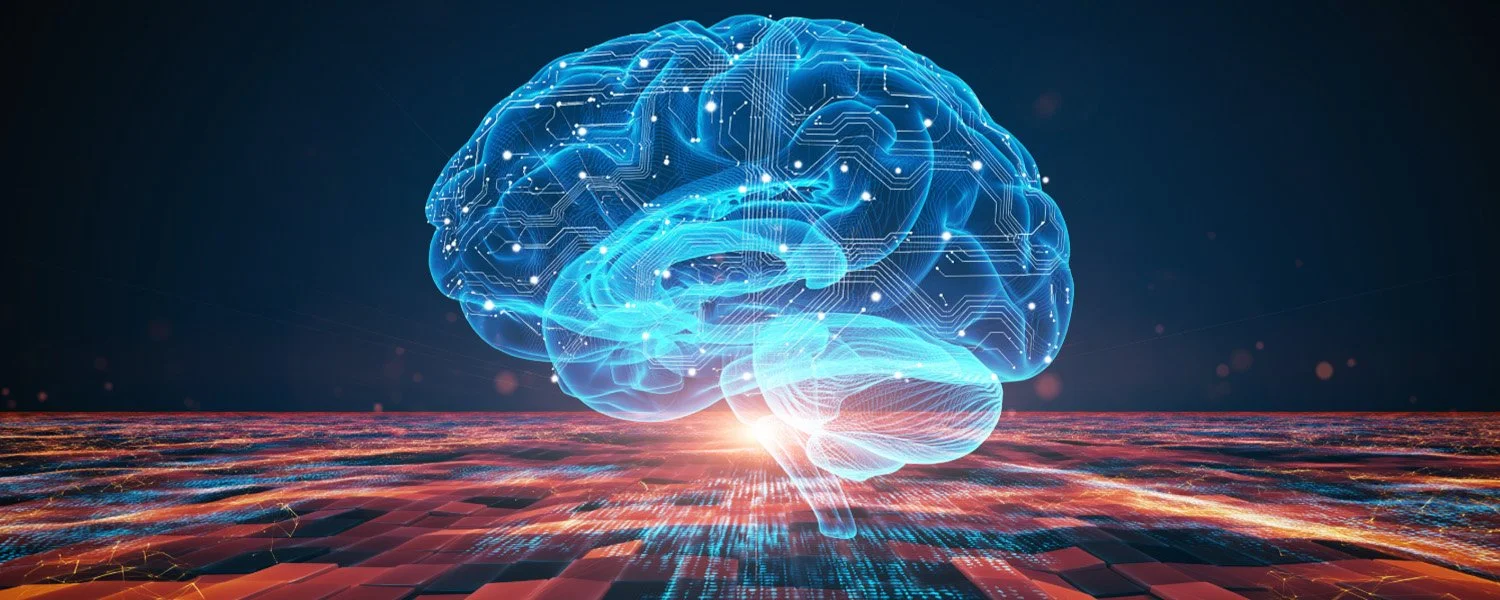
Neuromorphic computing goes against the usual von Neumann model, which has separate memory and a processor. Instead, it looks like the brain: it has distributed processing, local memory at "synapses," signaling that happens when events happen, and plasticity that changes in real time. That design makes systems that are very energy-efficient, can make decisions almost instantly at the edge, and can keep learning instead of being stuck after training. These traits are transformative for real-world systems such as prosthetics, self-driving cars, low-power sensors, and wearable neurotechnology.
This is not a small academic interest. In the last year, we've seen neuromorphic platforms grow from chips like Intel's Loihi and BrainChip's Akida to huge brain-inspired supercomputers that are useful in both research and industry. Each of these improvements makes the gap between biological processing and silicon smaller, which lets machines and humans work together more closely.
Recent Breakthroughs that Make a Difference
There are several news stories that show why this field is moving quickly from promise to product.
Around the world, teams and labs have made neuromorphic systems bigger than ever, with more neurons and less energy use. China's "Darwin" projects, like the "Darwin Monkey," are intriguing because they run billions of artificial neurons and use much less power than traditional datacenter AI systems. These systems demonstrate the application of large-scale spiking neural networks for challenging tasks.
National labs and research centers, like the SpiNNaker 2 initiative and other similar projects, are making platforms with many boards and many cores that can simulate tens to hundreds of millions of neurons for whole-brain models and neuroscience experiments.
These architectures are best for memory-local operations and event-driven computation, which are both things that the brain does well.
In the United States, the following are examples of investment and coordination: Academic consortia and NSF programs are paying for neuromorphic commons and hubs to make them more accessible to everyone and accelerate the process of turning them into useful tools for businesses. This initiative gives engineers and businesses the tools they need to move neuromorphic designs into medical devices, mobility, and defense applications.
Recent demonstrations that go beyond architectural novelty are probably the most impressive. Research teams have started to build artificial neurons that behave like living neurons, not just spiking approximations. Those devices promise to use even less energy and give next-generation brain-machine interfaces more powerful building blocks for computing.
Each of these things is a step toward real human-machine meshing, which means systems that can read neural signals, improve cognition, and respond and work as quickly and effectively as living things.
The Future of Cyborg Interfaces: From Augmentation to Meshing
As hardware changes, so do the possible ways to connect them. Neuromorphic processors are ideal for brain-computer interfaces (BCIs) for three reasons: (1) they can process neural data in real time at the edge with very little power; (2) they naturally support sparse, event-based inputs like spikes; and (3) they can learn locally, adapting to a person's neural patterns without having to go back and forth to the cloud. To put it simply, the technology finally fits the problem.
You should expect to see multi-modal mesosystems where wearable or implanted sensors, neuromorphic front ends, and adaptive software all work together. The first applications will focus on helping people recover (such as prosthetics, managing epilepsy, and improving senses), then on enhancing abilities (like memory support, attention control, and tools to assist thinking), and finally on combining biological systems with artificial neural networks for ongoing communication.
Risks: Security, Ethics, and the New Attack Surface
With the promise comes a lot of responsibility. When computers start to work like brains and connect with human nervous systems, the risks to privacy, safety, and security are huge. Neuromorphic devices, BCIs, and the software that trains them will be very valuable targets for theft, manipulation, and exploitation. Enemies might try to change how prosthetics work, mess up adaptive learning, or steal private neural data. We are, in many ways, setting up an important new piece of infrastructure: the embodied human-machine system.
Governance needs to be forward-thinking. That means making safety a priority from the start (fail-safe modes, verifiable learning constraints), building strong cryptographic and hardware attestations, and making laws that protect people's right to make their own decisions and keep their thoughts private. To attain a balance between innovation and safety, the public and private sectors must work together. This includes academia, industry, regulators, and civil society. Trust is the key to adopting new technologies. In neuromorphic BCIs, trust will be literal—necessary for adoption.
Policy and Strategic Needs
Policy and industry action should be guided by two short-term goals:
Standards and certification for medical and assistive devices that work like the brain. Agencies and standards groups need to set up interfaces, testbeds, and certification systems that keep people safe without stopping new ideas.
Designing systems that people can use with security in mind. We need to build resilience into both hardware and software, from hardware root-of-trust to transparent model governance. As neuromorphic systems move to the edge, keeping the supply chain safe and updating the system's lifecycle becomes crucial.
Investing in research for the public good (shared testbeds, reference implementations) will speed up good uses and make it harder for bad people to control capabilities.
What We Should Do Next
In the Hollywood sense, the merging of humans and machines is not about to happen. We are not replacing people with machines. Instead, we are moving toward ecosystems where biological and synthetic processors work together to make each other's strengths stronger. Neuromorphic computing provides the architectural bridge: it is efficient, adaptable, and can be embedded. We are laying the groundwork for a future where augmentation is safe, useful, and fair by making progress in sensing, low-latency networking, and AI governance.
In Inside Cyber, I said that the future of technology will depend on culture and governance as much as on chips and code. Neuromorphic meshing makes that need even stronger. If we get the policy, design, and ethics right, the next chapter could bring about huge medical advances, make things easier to get to, and offer new ways for people to be creative. If we don't succeed, we could make things worse in ways that are challenging to correct.
We have the power to design responsibly, regulate wisely, and keep human dignity at the heart of every design choice. That, more than the number of transistors or neurons, will decide if the cyborg future is a way to set people free or a weak spot.
Sources and more reading:
"The Meshing of Minds and Machines Has Arrived." by Chuck Brooks, Forbes
Inside Cyber: How AI, 5G, IoT, and Quantum Computing Will Change Our Privacy and Security by Chuck Brooks. Amazon
Reports on big neuromorphic systems like China's Darwin projects and the "Darwin Monkey." Science in Real Time
Brain-inspired supercomputer projects, like SpiNNaker 2. Tom's Hardware
Recent studies show that artificial neurons can closely mimic how biological neurons work (Nature Electronics / USC reporting). ScienceDaily