
A Conversation Between Christopher P. Skroupa, Skytop Editor-in-Chief, and Margaret E. Kosal, Professor, Georgia Institute of Technology / November 2, 2026
As emerging technologies continue to reshape national security, economic competitiveness, and corporate strategy, leaders face a difficult challenge: harnessing innovation while managing increasingly complex risks. Artificial intelligence, biotechnology, autonomous systems, advanced manufacturing, and other emerging capabilities are blurring traditional boundaries between civilian and military applications, commercial opportunity and strategic vulnerability.
In this conversation, Margaret E. Kosal shares her perspective on dual-use technologies, strategic intelligence, governance, and the evolving risks facing governments, corporations, boards of directors, and investors.
Christopher P. Skroupa: Emerging technologies often create a dual-use dilemma, where innovations developed for beneficial purposes can also be weaponized. How should governments rethink deterrence and proliferation when everyday innovation can rapidly become a strategic capability?
Margaret E. Kosal: One of the most significant challenges of the 21st century is that our traditional understanding of the dual-use dilemma is becoming increasingly inadequate.
Historically, dual use referred to the distinction between civilian and military applications, a framework that emerged largely from debates surrounding nuclear energy and nuclear weapons. While that distinction remains useful and continues to be embedded in law, it no longer provides a sufficient lens for understanding many of today's emerging technologies.
Technologies such as artificial intelligence, biotechnology, nanotechnology, robotics, and autonomous systems cannot be neatly categorized as civilian or military. Increasingly, the critical question is not what a technology was designed for, but how it is ultimately used.
A more useful framework comes from the concept of "dual-use research of concern," which has long been discussed within life sciences. The issue is not whether technology serves civilian or defense purposes. The issue is intent. Is technology being used for beneficial purposes, defensive purposes, or is it being intentionally misused for malicious ends?
That distinction is more difficult to assess because it requires understanding motivations and behaviors rather than simply assigning technologies to predefined categories.
This reality suggests that many of our current approaches to governance and regulation are no longer sufficient. That does not mean we should abandon existing frameworks. Rather, we need more sophisticated methods of analysis and risk assessment that reflect how modern technologies are developed, deployed, and exploited.
One of the greatest dangers is overregulation. Policymakers are understandably concerned about misuse by terrorists, hostile states, or criminal organizations. However, excessive restrictions can be just as harmful as insufficient oversight.
A more subtle form of overregulation occurs when regulators face incentives that punish risk-taking while offering little reward for enabling innovation. When decisionmakers are held accountable only for failures, the safest response becomes saying no.
Biomanufacturing offers an important example. Because of its association with genetic engineering and the cultural concerns surrounding it, some U.S. companies have been compelled to conduct testing and production overseas, even when existing laws provide no clear reason to prohibit those activities domestically.
The result is not simply slower innovation. It can weaken economic competitiveness, diminish national security advantages, and erode technological leadership.
The challenge is not choosing between innovation and security. The challenge is building governance systems that are sophisticated enough to support both.
Christopher: Intelligence in the age of technological diffusion presents new challenges. As advanced tools, open-source information, and decentralized networks become widely available, how should corporations rethink strategic intelligence?
Margaret: Companies must significantly expand their understanding of what strategic intelligence means.
Historically, corporate intelligence focused heavily on protecting intellectual property and monitoring competitors. While those responsibilities remain important, they are no longer sufficient. Many organizations today, particularly those developing frontier technologies, possess capabilities with significant geopolitical implications. A leading artificial intelligence company, for example, may have strategic influence that extends well beyond its industry. The societal, economic, and national security implications of its products can be profound.
As a result, organizations must think more broadly about risk. They need to consider not only how their products will be commercialized, but also how those technologies might be exploited by adversaries, criminal organizations, or hostile governments.
This is especially important for startups and emerging companies that may lack the resources or expertise to fully assess the strategic implications of their innovations.
At the same time, the growth of the Internet of Things, coupled with increasingly sophisticated disinformation and misinformation campaigns, requires corporations to expand their intelligence capabilities even further.
These threats extend well beyond cybersecurity. They can affect public trust, reputation, operational resilience, market valuation, and long-term competitiveness.
Organizations should begin viewing strategic intelligence not merely as a defensive function, but as an essential component of corporate strategy.
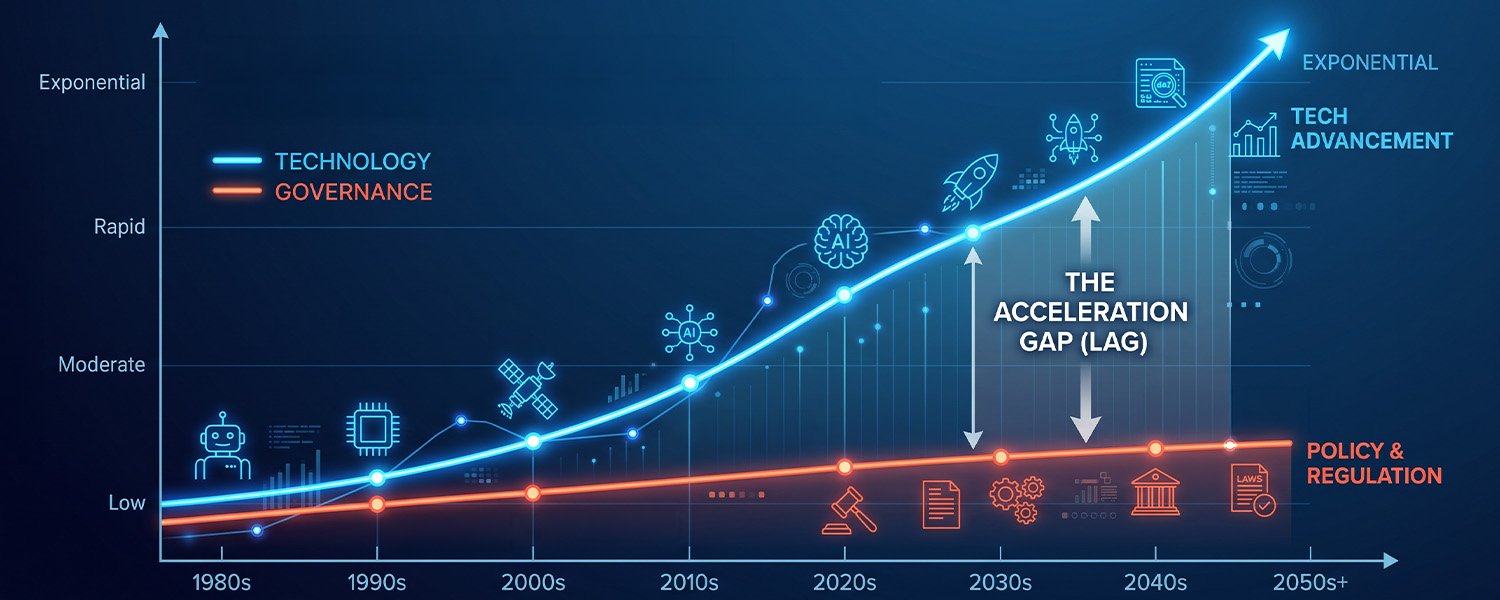
Christopher: Governance often struggles to keep pace with technological advancement. What models of governance or international cooperation are needed to prevent emerging technologies from outpacing our ability to manage their security implications?
Margaret: We should begin by acknowledging a difficult reality: governance will never fully keep pace with technological innovation.
That does not mean governance is futile. It simply means we need realistic expectations.
Attempting to restrict technologies before it is clear how they will be deployed, commercialized, or integrated into society can create significant unintended consequences. Premature regulation can slow innovation, undermine competitiveness, and disadvantage responsible actors while less constrained competitors move ahead.
At the same time, there are important improvements we can make.
First, we should resist the temptation to create entirely new regulatory regimes for every emerging technology. Existing domestic and international legal frameworks often provide more flexibility than many people realize. In many cases, the challenge is not the absence of law but the application of existing law.
Second, international governance institutions need stronger capabilities in strategic foresight. They must become more adept at identifying emerging risks before those risks become crises.
Equally important is relationship-building. Effective governance depends on trusted networks among governments, industry leaders, researchers, and international organizations.
When a crisis emerges, it is too late to begin building those relationships. The foundations for cooperation must already exist.
Christopher: Are there biological and chemical threats that policymakers continue to underestimate?
Margaret: Absolutely. One of the most persistent misconceptions is the tendency to underestimate the relative accessibility of chemical weapons, particularly in the context of terrorism. Biological threats, meanwhile, are often misunderstood in the opposite direction. Because biological systems are extraordinarily complex, discussions frequently gravitate toward worst-case scenarios while overlooking the practical challenges involved in developing and deploying biological weapons.
Complexity matters.
Just because a scientist can demonstrate something in a controlled laboratory environment does not mean a terrorist organization or even a nation-state can successfully replicate it in the real world.
Perhaps the most significant blind spot, however, is the tendency to overlook politics.
Many discussions surrounding biological and chemical weapons focus almost exclusively on technical capabilities while neglecting the political calculations that ultimately determine whether such weapons are employed.
For nation-states, the use of biological or chemical weapons is fundamentally a political decision. Ignoring those political dynamics means overlooking one of the most important factors in strategic risk assessment.
Christopher: Looking ahead, how do you see strategic intelligence evolving as artificial intelligence, autonomous systems, and synthetic biology become increasingly important to economic and national security?
Margaret: One of the most counterintuitive developments will be the growing importance of human expertise. Many people assume artificial intelligence will reduce the need for specialized knowledge. I believe the opposite is true.
As organizations increasingly rely on AI systems, large language models, and autonomous agents, they will need experts capable of evaluating information critically. Leaders will require people who can distinguish credible insights from flawed analysis, identify subtle warning signs, and exercise sound judgment under uncertainty.
Domain expertise will become more valuable, not less.
Technology can accelerate information gathering and analysis, but it cannot replace experience, context, and judgment. Strategic intelligence depends on understanding nuance, recognizing what matters, and knowing when additional scrutiny is required before action is taken.
The most effective intelligence organizations of the future will not simply possess more data. They will possess people capable of asking better questions, recognizing meaningful patterns, and determining what deserves attention and what does not.
In an age increasingly shaped by AI, human judgment remains the decisive strategic advantage.
Closing Thoughts
The pace of technological change is accelerating, but the principles of sound leadership remain largely unchanged. Organizations that succeed in the years ahead will be those that balance innovation with foresight, opportunity with responsibility, and technological capability with strategic judgment.
As Margaret E. Kosal makes clear, the future is not simply about what emerging technologies can do. It is about how societies, governments, and organizations choose to govern, deploy, and respond to them. For boards, executives, investors, and policymakers alike, understanding those choices may ultimately prove more important than understanding the technologies themselves.