
Securing The Space Frontier: Challenges and Promises in the Emerging Digital Era
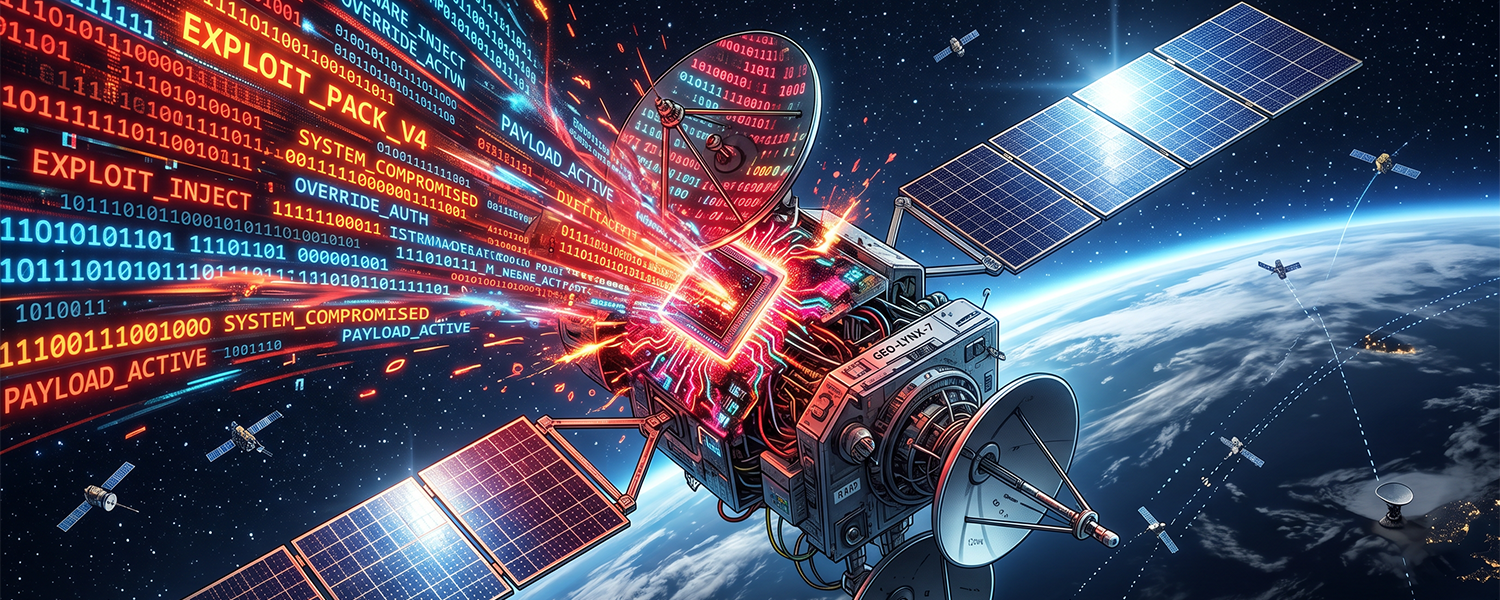
By Chuck Brooks, Skytop Contributor / May 11, 2026
Chuck Brooks serves as President and Consultant of Brooks Consulting International. Chuck also serves as an Adjunct Professor at Georgetown University in the Cyber Risk Management Program, where he teaches graduate courses on risk management, homeland security, and cybersecurity.
Chuck has received numerous global accolades for his work and promotion of cybersecurity. Recently, he was named the top cybersecurity expert to follow on social media, and also as one top cybersecurity leaders for 2024. He has also been named "Cybersecurity Person of the Year" by Cyber Express, Cybersecurity Marketer of the Year, and a "Top 5 Tech Person to Follow" by LinkedIn” where he has 120,000 followers on his profile.
As a thought leader, blogger, and event speaker, he has briefed the G20 on energy cybersecurity, The US Embassy to the Holy See, and the Vatican on global cybersecurity cooperation. He has served on two National Academy of Science Advisory groups, including one on digitalizing the USAF, and another on securing BioTech. He has also addressed USTRANSCOM on cybersecurity and serves on an industry/government Working group for DHS CISA focused on security space systems.
Chuck is a featured writer for Skytop Media and the SkyTop/Sling streaming TV show host of "Intelligence Briefing". He is also a contributor to Forbes, The Washington Post, Dark Reading, Homeland Security Today, Skytop Media, GovCon, Barrons, Reader’s Digest, The Hill, and Federal Times on cybersecurity and emerging technology topics. He has keynoted dozens of global conferences and written over 350 articles relating to technologies and cybersecurity.
In his career, Chuck has received presidential appointments for executive service by two U.S. presidents and served as the first Director of Legislative Affairs at the DHS Science & Technology Directorate. He served a decade on the Hill for the late Senator Arlen Specter on the Hill on tech and security issues. Chuck has also served in executive roles for companies such as General Dynamics, Rapiscan, and Xerox.
Chuck has an MA from the University of Chicago, a BA from DePauw University, and a certificate in International Law from The Hague Academy of International Law.
Space has become indispensable to modern life—powering global communications, navigation, intelligence, environmental monitoring, and national defense. The rapid commercialization of space, with thousands of low-Earth orbit (LEO) satellites launched and projections of over 25,000 by 2030 (GAO report on large constellations), has transformed the domain into a critical infrastructure sector. Yet this expansion dramatically amplifies cybersecurity risks. As I discuss in my book Inside Cyber: How AI, 5G, IoT, and Quantum Computing Will Transform Privacy and Our Security, and in recent Forbes and HSToday articles, securing space systems is no longer optional; it is a pressing imperative for economic stability, national security, and global resilience.
The threat landscape is evolving rapidly. Reports indicate a 118% increase in publicly disclosed space-cyber incidents in early 2025 compared to the prior year (with roughly 117 incidents reported from January to August 2025), driven by state actors and espionage (CSIS Space Threat Assessment 2025). Incidents like the 2022 Viasat KA-SAT malware attack, which disrupted communications during the Ukraine conflict, and recent breaches involving satellite hijacking for propaganda underscore the real-world stakes. Space systems face unique vulnerabilities: satellites cannot be easily patched once in orbit, ground stations often serve as weak links, and legacy protocols were not designed for today’s adversarial environment.
Key Challenges in Securing Space Systems
The proliferation of satellite constellations has massively expanded the attack surface, with thousands of assets carrying vast amounts of data and relying on open protocols for uplinks, downlinks, and cloud-based communications. This creates numerous entry points for intrusions—whether from Earth or, increasingly, from space itself—potentially disrupting GPS, messaging services, and critical infrastructure. Ground stations and supply chains compound these risks, serving as frequent weak links vulnerable to malware, social engineering, and compromises introduced by global vendors through backdoors or inadvertent flaws.
In-orbit limitations add further complexity: satellites operate without downtime for patching, depending on hardened but often outdated protocols. A single compromised node can cascade failures across entire constellations, and physical isolation offers no protection against remote cyber threats. State-sponsored actors exacerbate the danger through sophisticated jamming, spoofing, laser interference, and cyberattacks—including malware that could overheat satellites or trigger “kinetic boom” effects—blurring the lines between cyber and physical warfare.
Emerging technologies introduce new layers of risk. The integration of AI-driven operations and future quantum communications heightens complexity, as AI enables more adaptive attacks while quantum computing poses an existential threat to current encryption. Quantum computers, once sufficiently scaled, could use Shor’s algorithm to rapidly factor large numbers and break asymmetric schemes like RSA and ECC that secure satellite command uplinks, telemetry, and data transmission. Grover’s algorithm would halve the effective strength of symmetric keys, requiring longer keys or new algorithms. Adversaries may already be employing “harvest now, decrypt later” tactics—intercepting and storing encrypted satellite communications today for future decryption—particularly dangerous for long-mission satellites handling sensitive intelligence, financial, or defense data. Resource constraints on satellites (limited power, processing, and bandwidth) complicate retrofitting legacy systems, while the transition period creates a vulnerability window. Emerging countermeasures include post-quantum cryptography (PQC) algorithms standardized by NIST (e.g., lattice-based like CRYSTALS-Kyber) and quantum key distribution (QKD) via satellite, with demonstrations like ESA’s Eagle-1 mission (targeted launch late 2026/early 2027) (ESA Eagle-1), China’s Micius experiments, and industry tests (e.g., QuSecure with Starlink). Ransomware simulations have demonstrated high infection potential in LEO environments, with emulated tests achieving up to a 33% success rate (arXiv: Evaluating an Effective Ransomware Infection Vector in Low Earth Orbit Satellites). Meanwhile, fragmented regulations, limited threat-sharing, and the absence of unified standards hinder consistent defenses—particularly as the commercial space economy, valued at about $630 billion in 2023 and projected to reach $1.8 trillion by 2035 (World Economic Forum / McKinsey: Space - The $1.8 Trillion Opportunity), grows without uniform security mandates. These interconnected challenges threaten not only space assets but also cascading disruptions to terrestrial systems in finance, transportation, and defense.
Pathways Forward: Promises of Resilience and Innovation
Securing space requires proactive, multi-layered strategies rooted in frameworks such as NIST, Space Policy Directive 5, and CISA’s Space Systems Critical Infrastructure Working Group. Core principles include adopting the NIST Cybersecurity Framework for strategic risk management, continuous monitoring, and policy implementation; embedding security by design from the earliest stages of satellite and ground station development through hardened protocols, redundancy, encryption, authentication, and intrusion detection; and deploying advanced onboard intrusion detection systems to monitor telemetry, commands, and bus traffic while enabling predictive responses, safe-mode activation, and anomaly detection.
Robust supply chain risk management is equally vital—through rigorous vendor vetting, chain-of-custody controls, and heightened security for critical components—alongside independent command logging, signal-strength monitoring, and encrypted links to counter jamming and spoofing. Emerging protective measures should incorporate shielding against electronic pulses, urgent transition to NIST-standardized post-quantum cryptography to counter future quantum decryption risks, exploration of satellite-based quantum key distribution for unbreakable key exchange, and the use of generative AI and Cyber Digital Twins for simulation, resilience testing, and mitigation development.
Public-private partnerships remain essential, advanced through initiatives like CISA working groups, the Satellite Cybersecurity Act, ESA programs, and international efforts. A key legislative effort is the bipartisan Satellite Cybersecurity Act (S.3404), reintroduced in December 2025 by Senators Gary Peters (D-MI) and John Cornyn (R-TX) (Congress.gov - S.3404). This bill directs the Department of Commerce, in coordination with other agencies, to develop voluntary cybersecurity recommendations, create a public online clearinghouse of best practices and resources, and produce reports on federal support for satellite cybersecurity—along with a Government Accountability Office assessment of critical infrastructure integration. By offering accessible guidance without heavy mandates, it empowers industry to protect assets essential to GPS, communications, weather forecasting, and more.
Complementing U.S. efforts, the European Space Agency (ESA) advances cyber resilience through targeted programs (ESA Cyber Resilience). These include the Cyber Security Operations Centre (C-SOC) at ESOC for asset monitoring and protection, the European Space Security and Education Centre (ESEC) for training, and the Space Systems for Safety and Security (4S) program under ARTES 4.0, which develops secure satellite communications, the Space Cyber Range for simulation/training, and industry calls for cybersecurity products. ESA also supports the European Resilience from Space (ERS) initiative and quantum-secure communications via EuroQCI projects, emphasizing security-by-design, threat sharing, and collaboration to strengthen Europe’s space infrastructure.
Collaboration across these initiatives fosters threat intelligence sharing, workforce training, sector-specific standards, and norms for responsible behavior. By prioritizing innovation in cyber resilience to match space’s ambition, we can transform vulnerabilities into strengths.
The promise is transformative: secure space systems will enable breakthroughs in science, exploration, and global connectivity without compromise. Yet the window for action is narrowing as threats accelerate. Governments, industry, and academia must unite to embed cybersecurity as a core pillar of space operations. The final frontier demands our most vigilant defense—proactive investment today will safeguard tomorrow’s achievements.